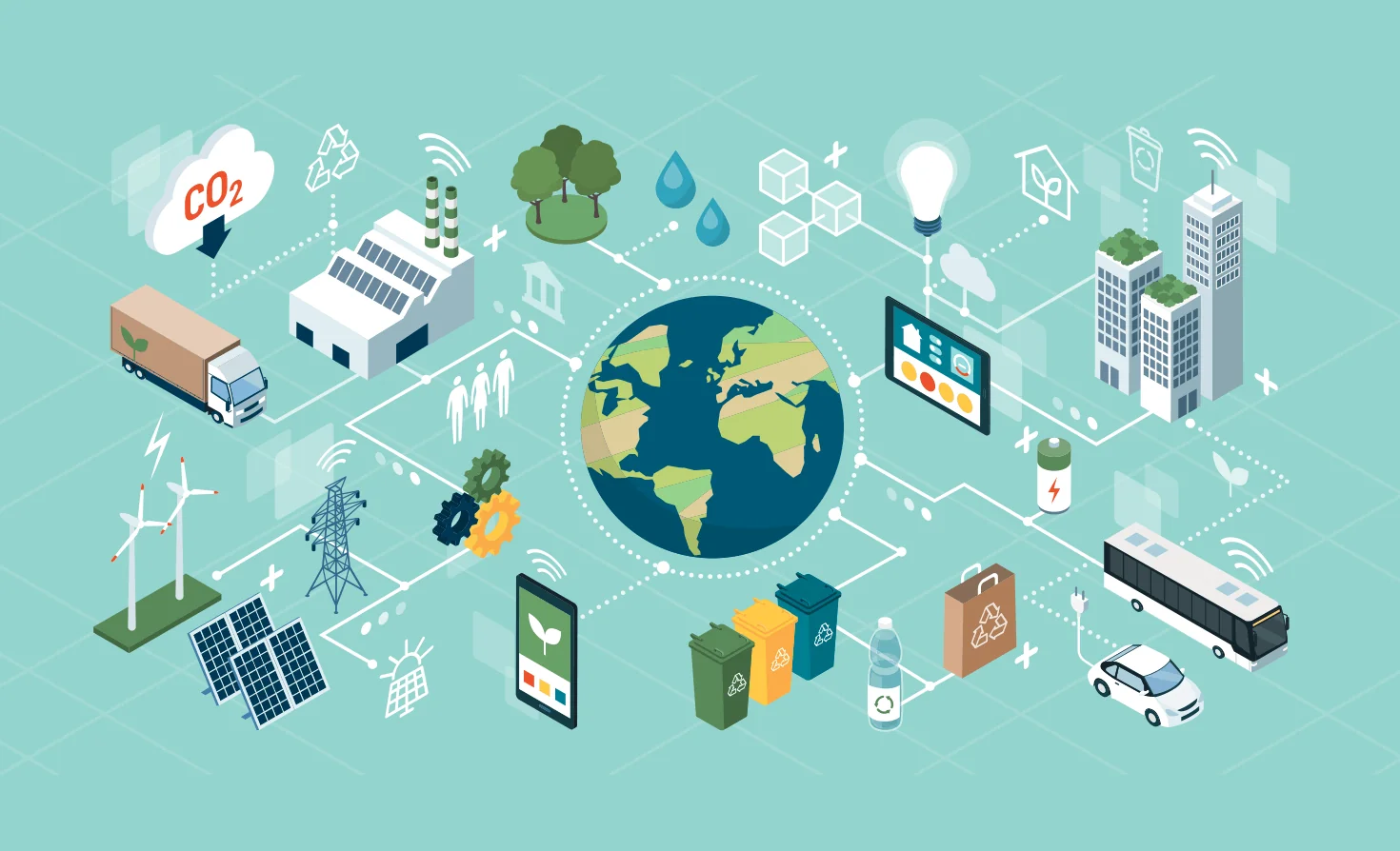
Climate change is not a distant threat in Africa. It is already affecting daily life through droughts, floods, extreme heat, crop losses, water stress, energy insecurity, and rising pressure on cities and infrastructure. Yet the climate story in Africa is not only one of vulnerability. It is also becoming a story of innovation. Across the continent, climate tech startups are building practical solutions to reduce emissions, improve resilience, and help communities adapt to environmental stress. These companies are working in sectors such as clean energy, mobility, agriculture, waste management, water, and green materials, turning climate pressure into a wave of entrepreneurial problem-solving.
That shift matters because Africa’s climate challenge is structurally different from that of many richer regions. The continent contributes relatively little to global emissions compared with major industrial economies, but it is highly exposed to climate disruption and infrastructure gaps. As a result, African climate tech often focuses on both mitigation and adaptation. Startups are not only trying to cut carbon. They are also trying to make food systems more resilient, energy access more reliable, transportation cleaner, and urban growth less wasteful. In Africa, climate technology is rarely abstract. It usually solves immediate economic and social problems at the same time.
Investor interest reflects that reality. Business Insider Africa reported in January 2025 that climate tech attracted 32% of total African tech funding in 2024, even though the share was lower than in 2023. That is a significant figure because it shows climate tech is no longer a niche category. It has become one of the largest and most important investment themes in the African startup ecosystem. Investors are increasingly recognizing that climate-linked businesses can generate both impact and commercial returns, especially when they address pressing structural gaps in energy, transport, agriculture, and resource efficiency.
One of the strongest areas of climate innovation is clean energy. Large parts of Africa still face unreliable electricity, expensive diesel dependence, or limited grid access. This creates a major opportunity for startups building solar systems, storage technologies, distributed energy platforms, and financing models that help households and small businesses adopt clean power. Silicon Africa’s 2025 overview of leading climate tech startups points to companies such as SunCulture, Hohm Energy, and Beacon Power Services as examples of ventures tackling energy affordability and efficiency through solar and energy management solutions. In these markets, clean energy is not just about sustainability. It is often the cheapest and most practical way to improve economic productivity.
Energy finance is especially important in this context. Even when clean technologies are cost-effective over time, upfront costs can remain a barrier for users. Business Insider Africa cited SunFi as a startup helping expand solar adoption by offering financing options that make systems more accessible. This highlights an important pattern in African climate tech: successful companies often combine hardware with financing, software, or distribution innovation. The technology alone may not be enough. What matters is whether the product can realistically reach customers who need it.
Electric mobility is another fast-growing climate tech segment. African cities face worsening congestion, air pollution, fuel-price volatility, and pressure on transport systems. Startups in electric buses, motorbikes, and battery-swapping are trying to reduce both emissions and operating costs. Silicon Africa’s list includes Roam and BasiGo as notable examples of climate startups advancing cleaner transportation solutions in Africa. These companies are attractive because mobility is a high-frequency sector: if an electric transport model becomes cheaper to operate than a fossil-fuel one, adoption can scale relatively quickly.
This is why climate tech in Africa often looks different from climate tech elsewhere. In some global markets, climate products are sold partly on environmental values. In Africa, they are more often sold on cost, reliability, and productivity. A startup offering electric mobility, solar irrigation, or efficient cooking solutions does not need customers to be climate activists. It needs the product to work better or cost less than the alternative. That business logic can be a powerful driver of adoption because it ties climate action directly to everyday economic needs.
Agriculture is another major frontier. Climate change is already disrupting rainfall patterns, worsening drought risks, and threatening food production across many African regions. Startups are responding with digital farm tools, water-efficient systems, climate-smart inputs, and predictive analytics. Business Insider Africa specifically mentioned ThriveAgric as one of the startups showing how technology-driven solutions can address local climate problems while contributing to broader global efforts. Silicon Africa also highlighted Complete Farmer and Apollo Agriculture for their work in digital agricultural management and sustainability-oriented farming systems. These companies matter because agriculture sits at the intersection of livelihoods, food security, and resilience.
Water technology is closely connected to that story. Climate change is intensifying water scarcity and increasing pressure on both rural and urban systems. Startups focused on water efficiency, treatment, and conservation are becoming more relevant as these stresses grow. Silicon Africa named Kumulus Water and Altech among the climate startups tackling water-related challenges through innovative conservation and treatment solutions. Water-tech innovation may receive less attention than energy or mobility, but in many African contexts it is just as strategically important because water stress directly affects households, farming, industry, and public health.
Waste management and the circular economy are also emerging as important climate-tech opportunities. Rapid urbanization is increasing pressure on waste systems, while poor recycling infrastructure leaves environmental and public-health costs unresolved. Startups are building platforms for recycling, upcycling, waste collection optimization, and material recovery. Silicon Africa cited Kudoti and Scrapays as examples of ventures encouraging circular-economy practices through better waste management and recycling models. These businesses show that climate innovation is not only about renewable energy. It also includes rethinking how cities use, discard, and recover materials.
Green construction is another promising area. As African cities grow, the materials used in housing and infrastructure will shape both emissions and environmental resilience. Startups working with recycled materials, modular systems, and low-impact construction methods could influence the long-term sustainability of urban development. Silicon Africa pointed to Kubik and EarthBond as examples of companies building sustainable construction materials and modular housing solutions from recycled inputs. This is particularly relevant because fast-growing cities create a large future market for lower-carbon building methods if the economics are right.
The climate-tech opportunity also extends to household consumption. Clean cooking, energy-efficient appliances, and distributed home systems can improve health outcomes while reducing emissions and fuel costs. Silicon Africa identified Koko Networks as a company developing smarter and more sustainable household cooking solutions. This type of innovation matters because household energy use is deeply connected to health, gender dynamics, and urban air quality. A climate solution in this space can deliver multiple benefits at once.
The ecosystem is growing, but it still faces major constraints. Startup Basecamp noted that climate tech in Africa continues to struggle with poor internet connectivity, high access costs, power-sector challenges, unfavorable regulation, weak ecosystem coordination, and limited funding availability. These problems affect both startup operations and customer adoption. A climate startup may have a compelling product but still struggle to distribute it at scale, secure working capital, or operate under inconsistent policy conditions.
Funding is a particularly complex issue. While climate tech is attracting more capital, much of the ecosystem still lacks sufficient early-stage support, patient capital, and founder-friendly financing tools. Climate businesses often involve hardware, infrastructure, field operations, or long adoption cycles, which can make them harder to fund than pure software startups. Yet the sector is clearly becoming more visible. ClimateOS reported in 2025 that African climate-tech startups raised about $3 billion from 2019 to 2024 and that Kenya, Nigeria, and South Africa were among the most represented markets in the group of most-funded startups. That level of capital suggests a real market, even if it remains unevenly distributed.
The geographic spread is also notable. ClimateOS said 15 African countries were represented in its review of the 50 most-funded climate-tech startups, with Kenya leading and countries such as Senegal, Ghana, Tanzania, Rwanda, Uganda, Ethiopia, Malawi, Mali, Sierra Leone, and Burkina Faso also appearing. This matters because climate problems are continent-wide, but innovation is not limited to the biggest hubs. It suggests that climate entrepreneurship is emerging across diverse ecosystems, often in places where environmental stress is especially intense.
Another encouraging sign is the rise of targeted support programs. Recent calls and initiatives have focused on startups working in blue economy solutions, e-mobility, clean energy, and climate resilience. FSD Africa reported funding support for seven startups developing blue-economy climate resilience solutions, while the ClimaFii Alliance announced up to $85,000 in catalytic support for Sub-Saharan African startups building clean energy, electric mobility, and emission-reduction solutions for micro and small enterprises. These programs are important because many promising climate ventures need more than venture capital; they need technical support, ecosystem access, and blended financing.
This points to a larger truth about climate tech in Africa: success often depends on collaboration. Startups can move fast, but they usually need partnerships with governments, financiers, development institutions, utilities, farmer groups, or distributors. ClimateOS emphasized the importance of ecosystem coordination in helping climate-tech ventures scale, and Business Insider Africa argued that founders and investors alike need to prioritize climate-resilient business models. The most durable companies are likely to be those that combine innovation with practical deployment partnerships.
What makes African climate tech especially compelling is that it often delivers both adaptation and economic inclusion. A solar company can reduce emissions while expanding electricity access. A climate-smart agriculture platform can improve food resilience while raising farmer incomes. An electric mobility business can reduce pollution while lowering transport operating costs. A recycling platform can cut waste while creating new income streams. These overlapping benefits give climate startups in Africa a strong strategic position. They are not solving one problem in isolation. They are often solving several at once.
The long-term significance of this sector is hard to overstate. Africa’s climate future will be shaped not only by global emissions trajectories, but also by the technologies and business models it adopts domestically. If clean energy, resilient agriculture, sustainable transport, circular materials, and water innovation scale across the continent, they could influence development patterns for decades. Startups alone will not solve climate change, but they can become some of the most agile institutions in the fight against it.
Climate tech startups in Africa are therefore doing more than building green products. They are rethinking how energy is delivered, how food is grown, how goods are transported, how waste is handled, and how communities adapt to environmental stress. The sector still faces serious obstacles, from financing gaps to policy uncertainty, but its momentum is real. As climate pressure intensifies, the startups designing practical, affordable, and locally relevant solutions may become some of the most important builders of Africa’s economic future.